Can Sleep Apnea Be Treated With Oral Surgery?
If you have been diagnosed with sleep apnea, you may be looking for an alternative to using a CPAP machine every night. For some people, oral and maxillofacial surgery can improve the airway and reduce sleep apnea symptoms. However, surgery is not the best option for everyone.
The right treatment depends on why your airway becomes blocked during sleep. A sleep study, physical exam, and imaging can help specialists identify whether the issue is related to the jaw, tongue, soft palate, tonsils, or another part of the upper airway. From there, your care team can determine whether surgery may help and which procedure is most appropriate.
Can Sleep Apnea Be Treated With Oral Surgery?
Obstructive sleep apnea can sometimes be treated with oral or maxillofacial surgery, particularly when structural features contribute to airway blockage. This may include a small or recessed jaw, a tongue that falls backward during sleep, enlarged tissue in the throat, or limited airway space.
Surgery does not work the same way for every patient. Some procedures focus on one area of obstruction, while others, such as jaw advancement surgery, can enlarge the airway more broadly. In many cases, surgery is considered when CPAP therapy, oral appliance therapy, weight management, or other non-surgical treatments have not worked well or are difficult to tolerate.
An oral and maxillofacial surgeon may use cephalometric X-rays, 3D imaging, and other diagnostic tools to evaluate the jaw and airway. They also review sleep study results, symptoms, medical history, and previous treatments.
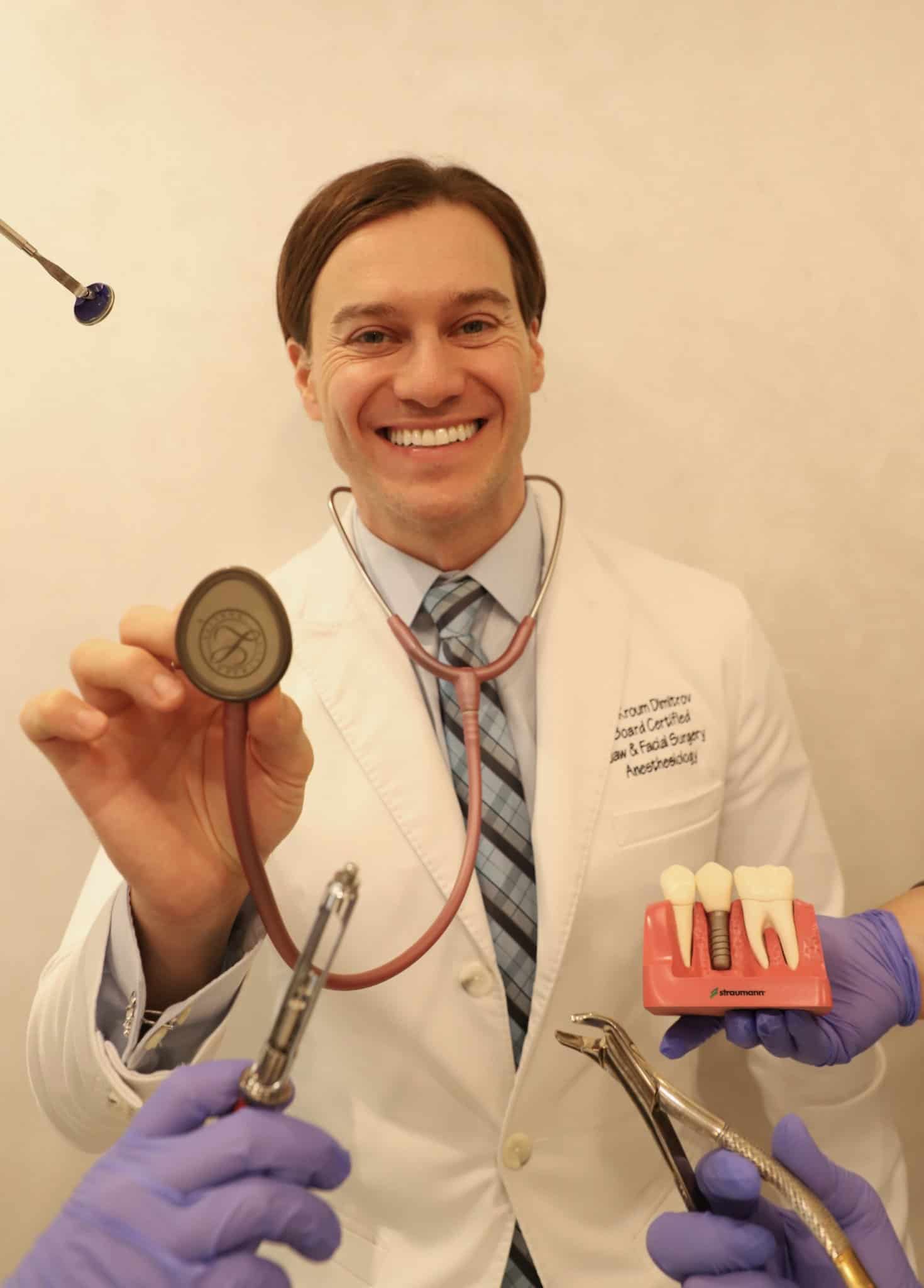
“The goal is to identify the specific areas contributing to airway obstruction rather than relying on a one-size-fits-all treatment plan,” says Dr. Kroum Dimitrov, a board-certified oral and maxillofacial surgeon who provides treatment options for sleep apnea Miami. Because sleep apnea can involve more than one area of the airway, care often involves both a sleep medicine specialist and a surgeon.
How Sleep Apnea Narrows the Airway and Affects Health?
Obstructive sleep apnea happens when the upper airway repeatedly narrows or closes during sleep. As the muscles in the throat relax, soft tissues may collapse inward and the tongue may move backward. This can temporarily stop breathing or significantly reduce airflow.
When the airway becomes blocked, oxygen levels can drop. The brain briefly wakes the body enough to restart breathing, often causing snoring, gasping, or choking sounds. These awakenings may happen many times each night, even if you do not remember them in the morning.
Over time, poor-quality sleep can lead to daytime fatigue, trouble concentrating, mood changes, and morning headaches. Untreated obstructive sleep apnea is also associated with a higher risk of high blood pressure, heart disease, stroke, and certain metabolic concerns. That is why it is important to seek treatment rather than viewing loud snoring as only an inconvenience.
When Is Oral Surgery Recommended for Sleep Apnea?
Oral surgery may be recommended when an evaluation identifies a clear anatomical cause of airway obstruction. For example, surgery may be considered when the jaw position limits airway space, the tongue contributes to blockage, or excess tissue around the palate and throat is part of the problem.
It is often discussed for people with moderate to severe obstructive sleep apnea, especially when CPAP therapy is not tolerated or has not adequately controlled symptoms. Surgery may also be an option for patients who cannot use an oral appliance or who have anatomy that makes a surgical approach more likely to help.
Before recommending surgery, specialists typically review:
- Sleep study results, including the apnea-hypopnea index and oxygen levels
- Symptoms such as snoring, daytime sleepiness, and witnessed pauses in breathing
- The patient’s medical history and overall health
- Jaw, tongue, palate, and throat anatomy
- Previous experience with CPAP or oral appliance therapy
- The expected benefits, limitations, and risks of the procedure
A surgical plan should be individualized. Even when surgery improves the airway, some patients may still need CPAP or another treatment afterward.
What to Expect at an Oral Surgery Evaluation?
An oral surgery evaluation begins with a detailed discussion of your sleep apnea diagnosis, symptoms, medical history, and current treatment. Bring your sleep study results if you have them, along with information about any CPAP or oral appliance use.
The surgeon will examine your mouth, teeth, jaw, tongue, and throat. They may also assess how your bite and facial structure affect airway space. Imaging, such as cephalometric X-rays or cone beam CT scans, may be used to evaluate the jaw and airway more closely.
In some cases, the surgeon may request an updated sleep study or coordinate with a sleep medicine physician. Certain patients may also need an evaluation from an ear, nose, and throat specialist, particularly when nasal obstruction, tonsils, or other throat structures are involved.
The consultation should include a clear conversation about alternatives to surgery, the expected recovery period, and how success will be measured after treatment.
Oral Surgeries for Sleep Apnea and How They Work?
Several procedures may be used to address obstructive sleep apnea. The best option depends on where the airway is narrowing.
Uvulopalatopharyngoplasty, or UPPP, reshapes or removes selected tissue from the soft palate and uvula. The goal is to create more space at the back of the throat. This procedure may be helpful for some patients with palatal obstruction, though it does not address every possible site of airway collapse.
Genioglossus advancement moves the bony attachment of the main tongue muscle forward. This helps reduce the likelihood that the tongue will fall backward and block the airway during sleep.
Maxillomandibular advancement, or MMA, moves both the upper and lower jaws forward. This enlarges the airway behind the tongue and soft palate. MMA is a more extensive procedure, but it can be particularly effective for patients with significant jaw-related airway restriction or severe sleep apnea.
Other procedures may be considered depending on a patient’s anatomy, including surgery involving the nose, tonsils, or hyoid bone. Your surgeon should explain why a particular approach is being recommended and what it can realistically achieve.
Recovery, Risks and Long-Term Results
Recovery varies based on the procedure. Throat procedures may involve soreness, difficulty swallowing, and swelling for several days or weeks. Jaw surgery typically requires a longer recovery period, dietary changes, and close follow-up while the bones heal.
All surgery carries risks. These may include bleeding, infection, anesthesia-related complications, pain, swelling, changes in sensation, and incomplete improvement in sleep apnea. Procedure-specific risks should be discussed carefully before you decide.
Follow-up is essential. A repeat sleep study is often recommended after healing to determine whether apnea severity and oxygen levels have improved. This information helps your care team decide whether any additional treatment is needed.
Oral surgery can be a meaningful treatment option for some people with obstructive sleep apnea, particularly when airway anatomy plays a major role. It is not a one-size-fits-all solution, and it should be considered as part of a full evaluation with sleep and surgical specialists.
If you are struggling with CPAP or want to understand whether your jaw, tongue, or throat structure may be contributing to sleep apnea, ask your provider about a referral for an airway-focused surgical evaluation.
Why to Choose Love Your Jaws for Sleep Apnea Treatment in Miami?
Choosing Love Your Jaws for sleep apnea treatment in Miami ensures you receive top-tier care from Dr. Kroum Dimitrov, a dual board-certified maxillofacial surgeon with specialized expertise in complex airway issues.
The center offers advanced surgical solutions, such as orthognathic surgery, which correct the underlying anatomical defects of the jaw to permanently open the airway and cure obstructive sleep apnea.
By leveraging state-of-the-art 3D digital mapping, the clinic designs highly precise, customized treatment plans that drastically improve sleep quality and eliminate the need for cumbersome CPAP machines.
Furthermore, their elite in-office anesthesia protocols guarantee maximum patient safety and comfort throughout the entire corrective process.